




TikTok, the changing short-form video platform tha...
news-extra-space
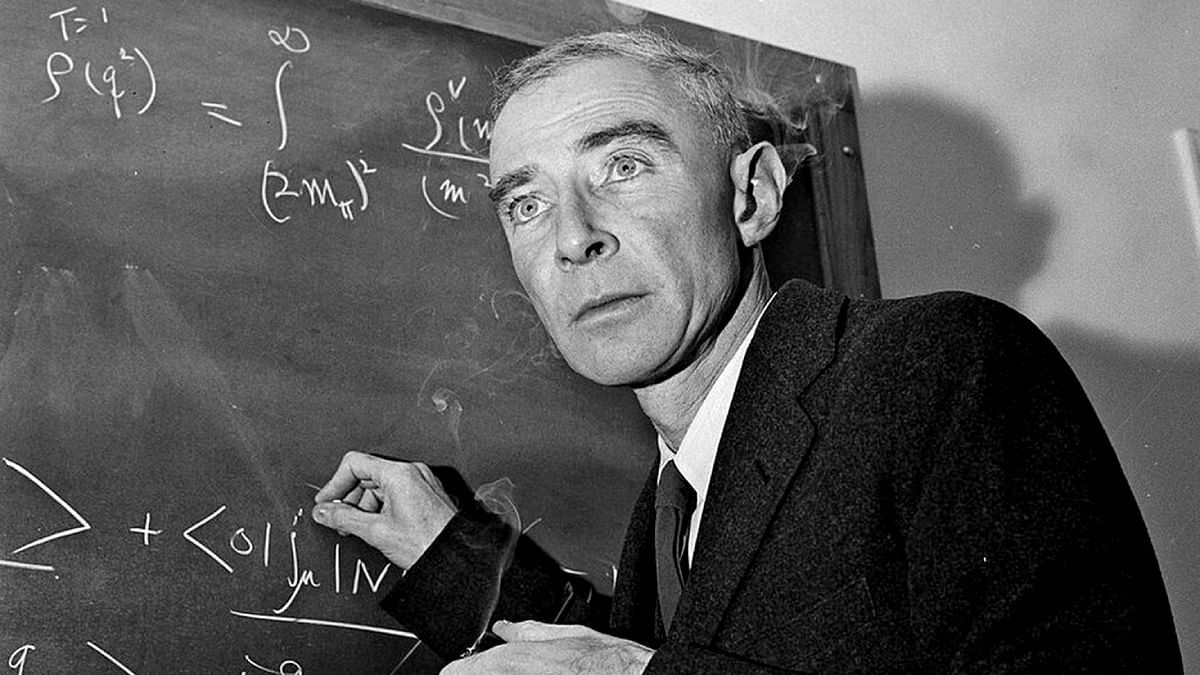
 "More evidence has come to light of the bias and unfairness of the process that Dr. Oppenheimer was subjected to," she added, "while evidence of his loyalty and love of country has only been further affirmed."
Historians, who have long lobbied for the reversal of the clearance revocation, praised the vacating order as a milestone.
“I’m overwhelmed with emotion,” said Kai Bird, co-author with Martin J. Sherwin of “American Prometheus,” a 2005 biography of Oppenheimer that won the Pulitzer Prize.
The decision is the result of decades of scientific lobbying to clear Oppenheimer's name.
"History matters," Kai Bird, co-author of the Oppenheimer biography American Prometheus, told The New York Times. "Students of American history will now be able to read the final chapter and see that what happened to Oppenheimer in that kangaroo court proceeding was not the end of the story."
"More evidence has come to light of the bias and unfairness of the process that Dr. Oppenheimer was subjected to," she added, "while evidence of his loyalty and love of country has only been further affirmed."
Historians, who have long lobbied for the reversal of the clearance revocation, praised the vacating order as a milestone.
“I’m overwhelmed with emotion,” said Kai Bird, co-author with Martin J. Sherwin of “American Prometheus,” a 2005 biography of Oppenheimer that won the Pulitzer Prize.
The decision is the result of decades of scientific lobbying to clear Oppenheimer's name.
"History matters," Kai Bird, co-author of the Oppenheimer biography American Prometheus, told The New York Times. "Students of American history will now be able to read the final chapter and see that what happened to Oppenheimer in that kangaroo court proceeding was not the end of the story."
 The Department of Energy, according to Granholm, is also reconsidering the decision due to a "responsibility to correct the historical record and honor Dr. Oppenheimer's profound contributions to our national defense and the scientific enterprise at large."
Oppenheimer passed away in 1967. Oppenheimer, a new film about the famous physicist, is set to hit theaters in July.
Oppenheimer was born in New York City to German Jewish immigrants and studied physics at Cambridge under Ernest Rutherford before earning his PhD in 1927 from the University of Gottingen under Max Born. He eventually became a professor at the University of California, Berkeley. When President Franklin D. Roosevelt authorized the Manhattan Project and appointed Major General Leslie R. Groves as its commander, Groves chose Oppenheimer to lead the secret weapons laboratory in Los Alamos, New Mexico. True, Oppenheimer held left-wing political views and had never received the Nobel Prize (although he was nominated several times). Groves, on the other hand, believed the physicist had the breadth of knowledge to bring together physicists, chemists, engineers, and metallurgists, among others, whose expertise would be critical to the project.
The Department of Energy, according to Granholm, is also reconsidering the decision due to a "responsibility to correct the historical record and honor Dr. Oppenheimer's profound contributions to our national defense and the scientific enterprise at large."
Oppenheimer passed away in 1967. Oppenheimer, a new film about the famous physicist, is set to hit theaters in July.
Oppenheimer was born in New York City to German Jewish immigrants and studied physics at Cambridge under Ernest Rutherford before earning his PhD in 1927 from the University of Gottingen under Max Born. He eventually became a professor at the University of California, Berkeley. When President Franklin D. Roosevelt authorized the Manhattan Project and appointed Major General Leslie R. Groves as its commander, Groves chose Oppenheimer to lead the secret weapons laboratory in Los Alamos, New Mexico. True, Oppenheimer held left-wing political views and had never received the Nobel Prize (although he was nominated several times). Groves, on the other hand, believed the physicist had the breadth of knowledge to bring together physicists, chemists, engineers, and metallurgists, among others, whose expertise would be critical to the project.

Leave a Reply






TikTok, the changing short-form video platform tha...

In innumerable ways, technology has revolutionized...

source: Los Angeles Times , a classic film that...

source: Bleeding Cool Disney Plus has announced...
source: Los Angeles Times The world of Harry Po...

source: Fortress of Solitude DC's Blue Beetle i...